
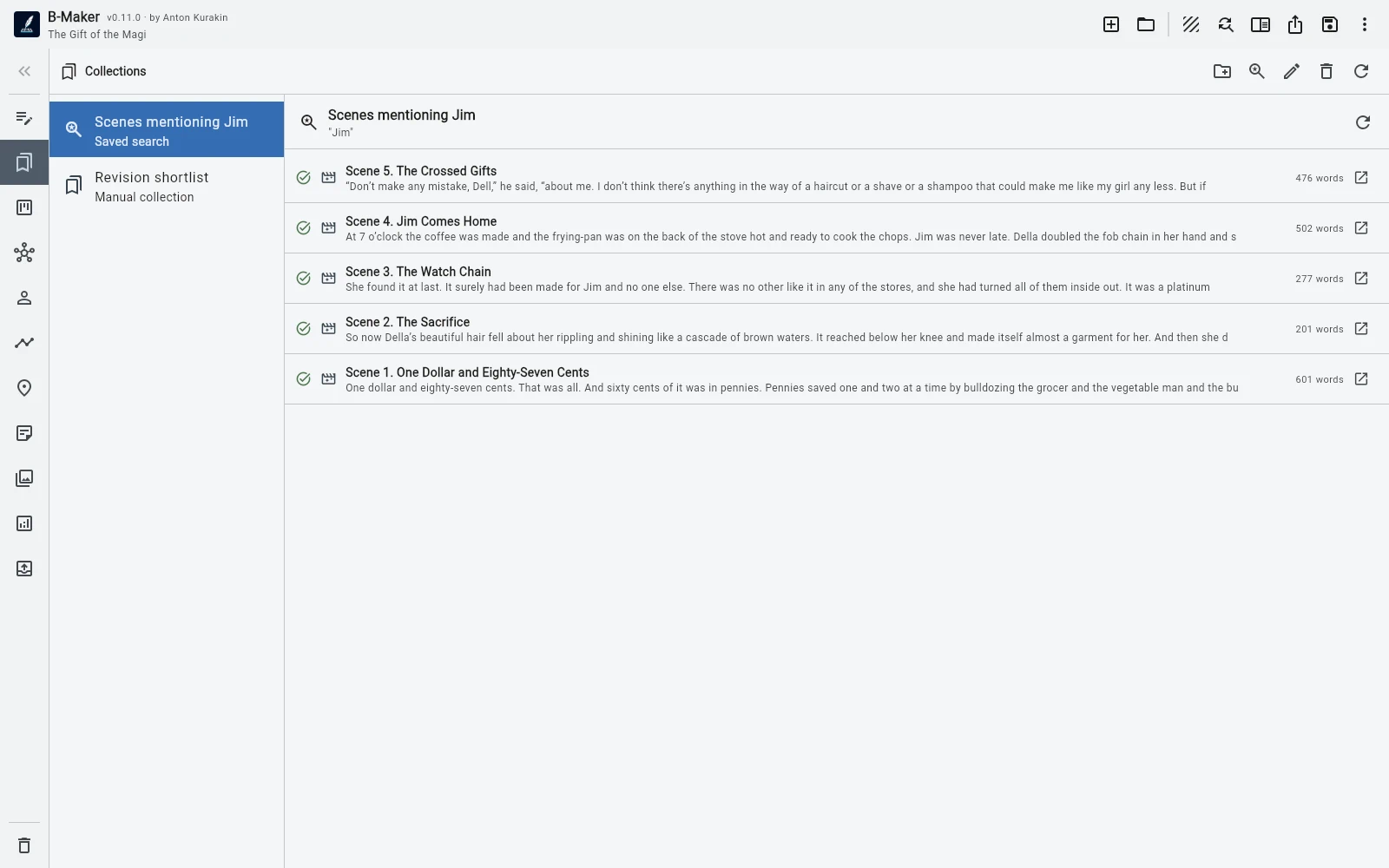
Keep the original articles intact in an archive. Build a separate manuscript structure in the same project, then reuse ideas, examples, and passages deliberately.
Preserve the source material
Move finished articles into an organizational Published folder. They remain searchable and available for reference, while the branch can stay out of the final book export.
This gives you a stable source archive instead of destroying the original publications while editing the book.
Regroup by reader journey, not chronology
Use collections and saved searches to gather articles around themes. Then design a book order based on what a reader must understand first, not when a post was published.
Some articles will merge, some will become one chapter section, and some may disappear entirely.
Rewrite the seams
Repeated introductions, duplicated explanations, missing transitions, and inconsistent assumptions are the biggest signs of a stitched-together article collection. A real book needs new connective material and often new chapters.
Versions let you rewrite borrowed material without losing the original source text.
Frequently asked questions
Should I copy every article into the book?
No. Treat articles as source material. A coherent book usually needs a different order, fewer repetitions, and new transitions.
Can I keep the original articles while building the book?
Yes. Keep the published archive in an organizational folder and build a separate manuscript structure in the same project.
Related B-Maker guides
Writing Software for Articles and Books — Keep Everything Together · Nonfiction Writing Software — Research, Structure, Revisions and Publishing · Writing Software for Bloggers and Technical Writers — Drafts, Versions and Archive
Try the workflow on a real project.
Open B-Maker in the browser and start with one chapter or one article. Add deeper tools only when the project needs them.