
AI can propose. The manuscript should not change until the author decides.
Use analysis before rewriting
If a chapter feels weak, the first useful question may be why. Structure, pacing, clarity, audience fit and story consistency can be analyzed separately before the model is asked to touch the prose.
This keeps diagnosis and authorship distinct. A critique can be useful even when none of its rewrite suggestions are accepted.
Revise a defined scope
AI editing is safer when the scope is explicit: selected text or a whole chapter, plus a clear instruction such as proofread, improve clarity, shorten, expand, improve dialogue or preserve the author's voice while fixing mechanics.
assets/img/bmaker/bmaker-compare-ai-editor-01.webpCreate a new version instead of overwriting
B-Maker can turn an AI revision into a separate version. The original stays available, the proposed revision can be reviewed, and the author can decide whether to make it current.
This is the difference between using AI as a reversible experiment and letting it become an invisible co-author.
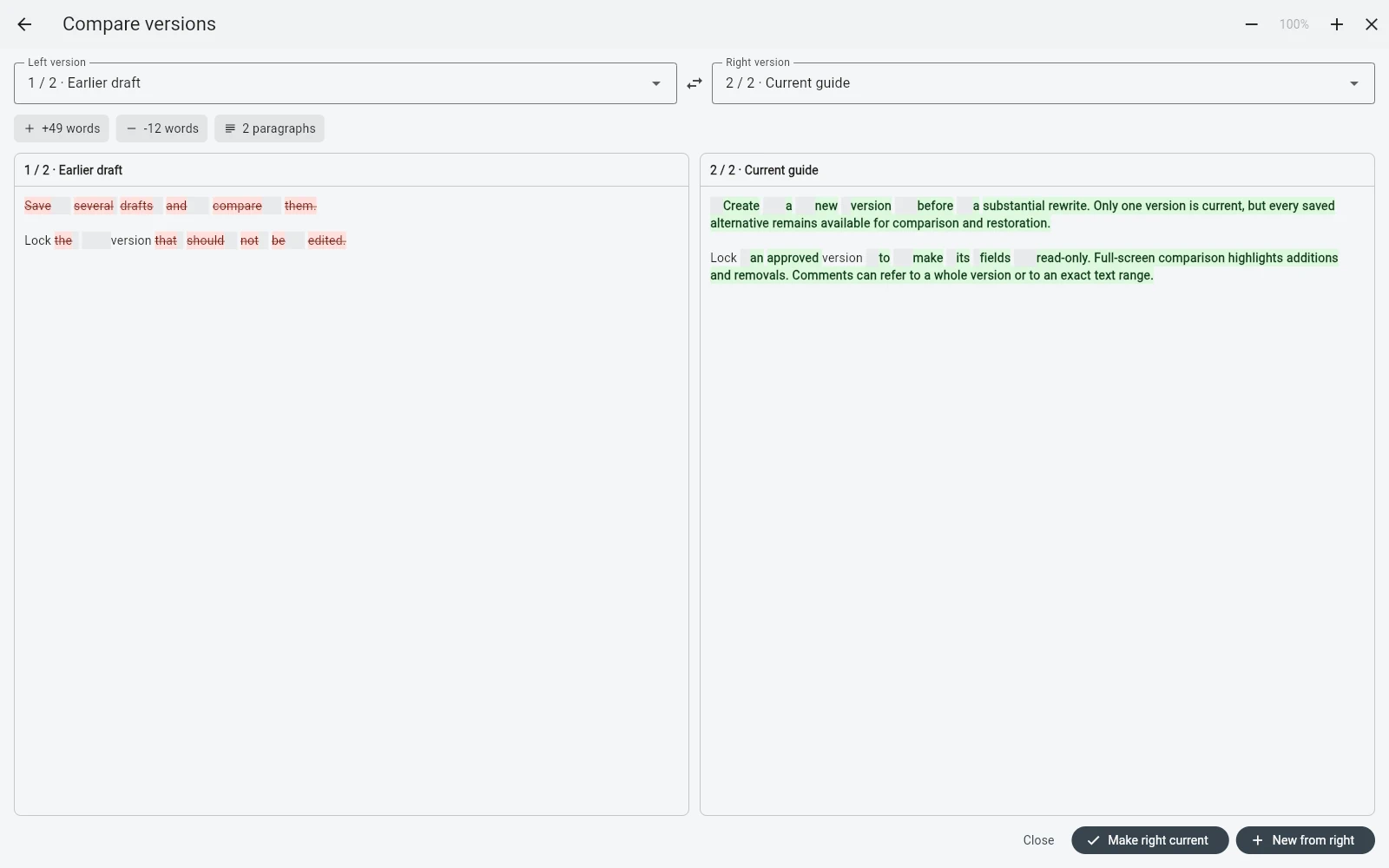
Compare what changed
Reading only the AI output makes over-editing easy to miss. Side-by-side comparison shows whether meaning shifted, details disappeared, voice flattened or the revision genuinely improved the text.
Use external ChatGPT workflows when needed
B-Maker can also export marked manuscript context for ChatGPT and import returned sections as new versions. That preserves the same principle: external AI does not silently overwrite current text.
What to look for in an AI book editor
Look for explicit scope, revision instructions, preserved originals, visible comparison, separate analysis reports, optional AI, control over what text is sent, and a workflow that does not make generated text automatically canonical.
Related B-Maker material
AI manuscript analysis · Why AI + versions · Why AI inside B-Maker · Version management