
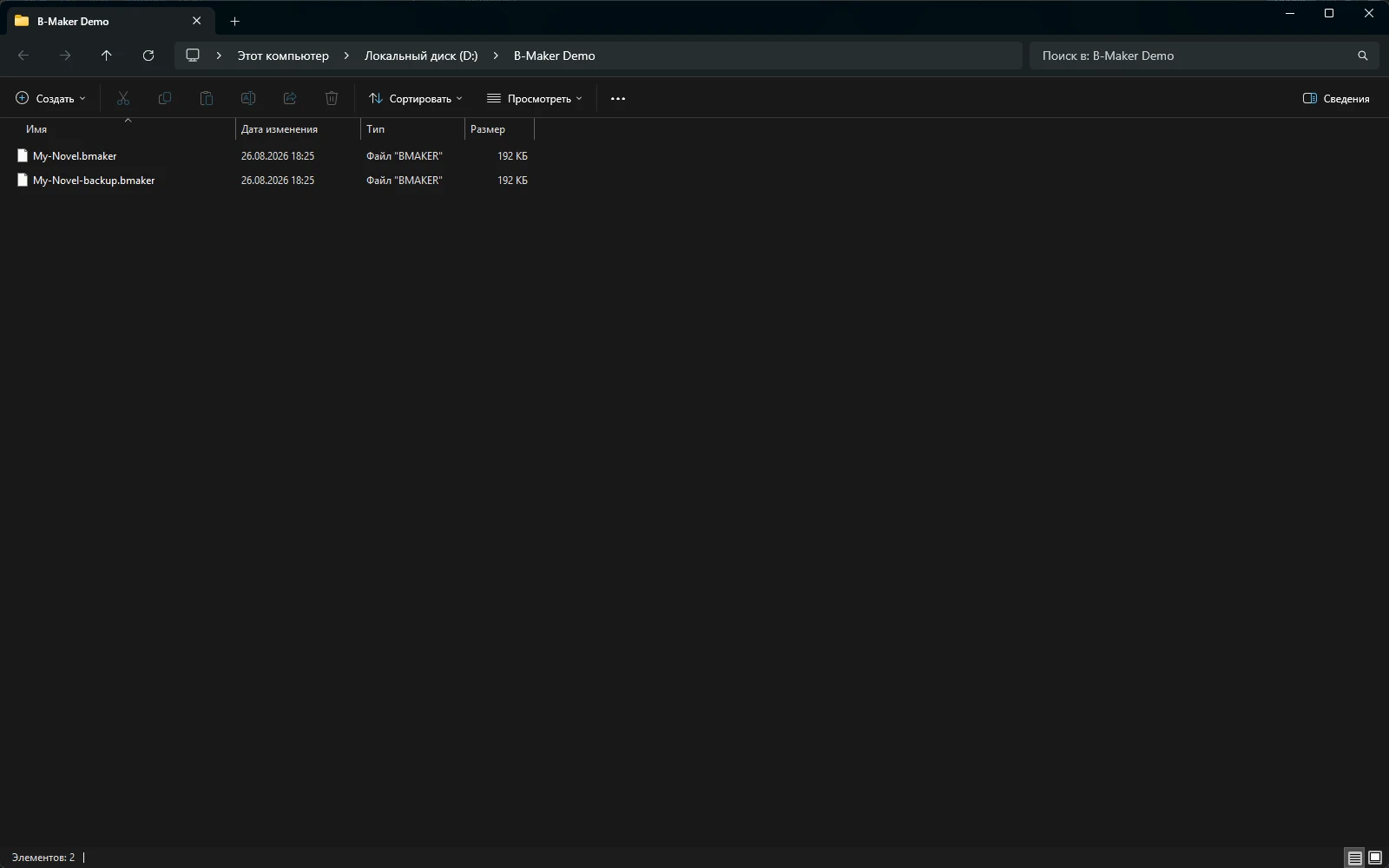
“Where is my book?” can still have a concrete answer: this project file.
Cloud-native systems solve real problems
Automatic sync, collaboration, server backups, and access from many devices are valuable. If real-time collaboration is your main requirement, a cloud-native system may be the better design.
But mandatory cloud changes ownership
The canonical copy becomes an account object managed by a service. Leaving the service, understanding backup state, or knowing what exactly represents the whole project can become less obvious.
Local-first keeps the project portable
A .bmaker file can contain manuscript structure, versions, planning, comments, publishing material, and project state while remaining one recognizable object that you can copy and back up.
You can still use the cloud
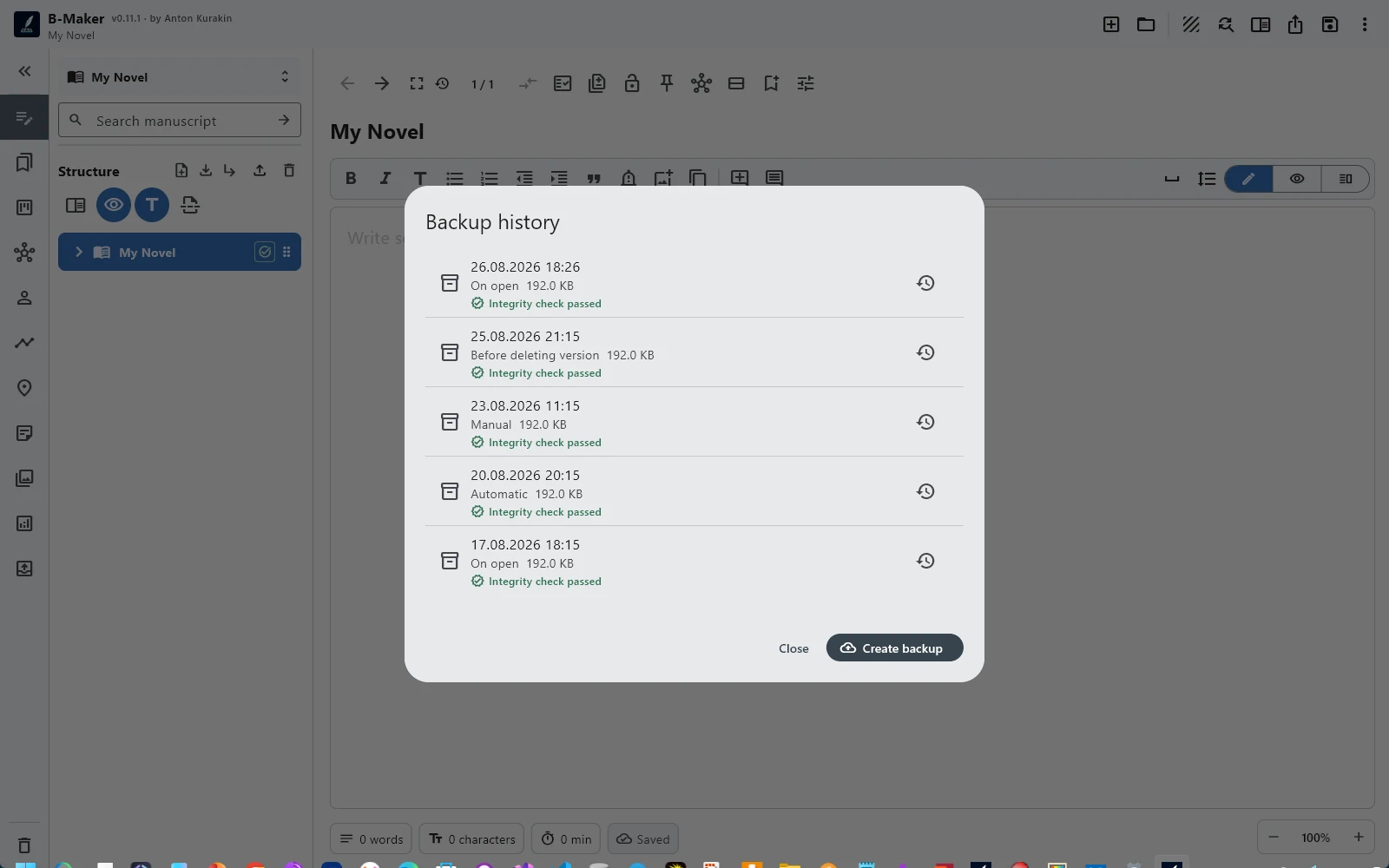
Put the project into your preferred backup system or cloud drive if that fits your workflow. The difference is that cloud infrastructure is a choice around the project rather than the only place where the project is allowed to exist.
Why this is a workflow feature
You know what to copy before a risky change, what to archive when the book is finished, and what object needs independent backup. Ownership reduces ambiguity.