
What is still uncertain, what is already decided, and what has already become real text?
Use an outline for decisions already made
The manuscript tree should answer the stable question: what is the current structure of the book? Chapters, parts and scenes belong there once their place is known.
Trying to use the same tree for every unresolved idea usually creates clutter. Planning needs a looser space before commitment.
Use an Idea Map before the structure is ready
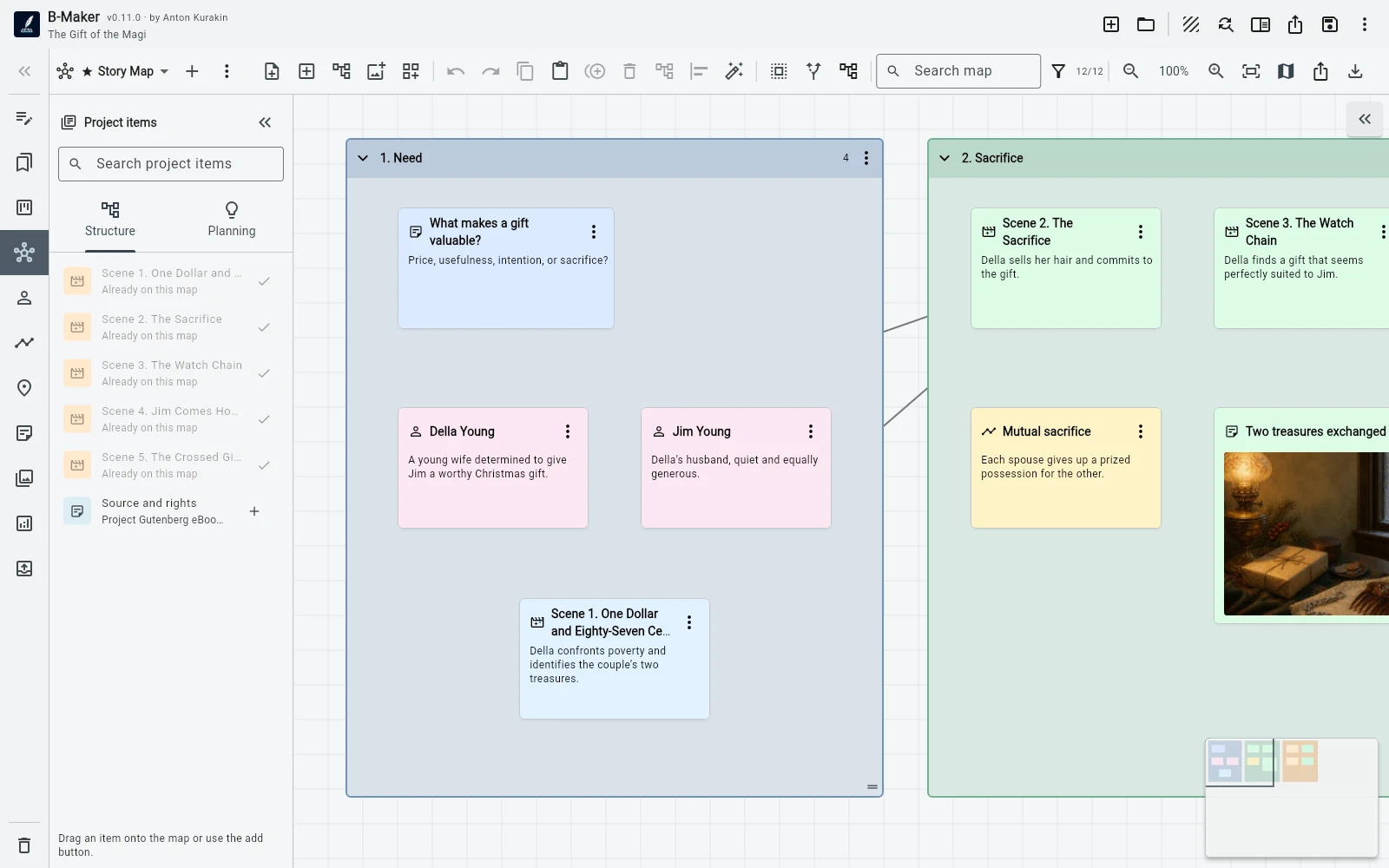
A freeform map is useful for relationships, clusters and alternatives. In B-Maker the map can contain notes, real chapters, characters, plotlines, images and other project entities. Notes and groups can later become real structure items rather than being copied into another application.
Fiction needs dimensions that an outline cannot show well
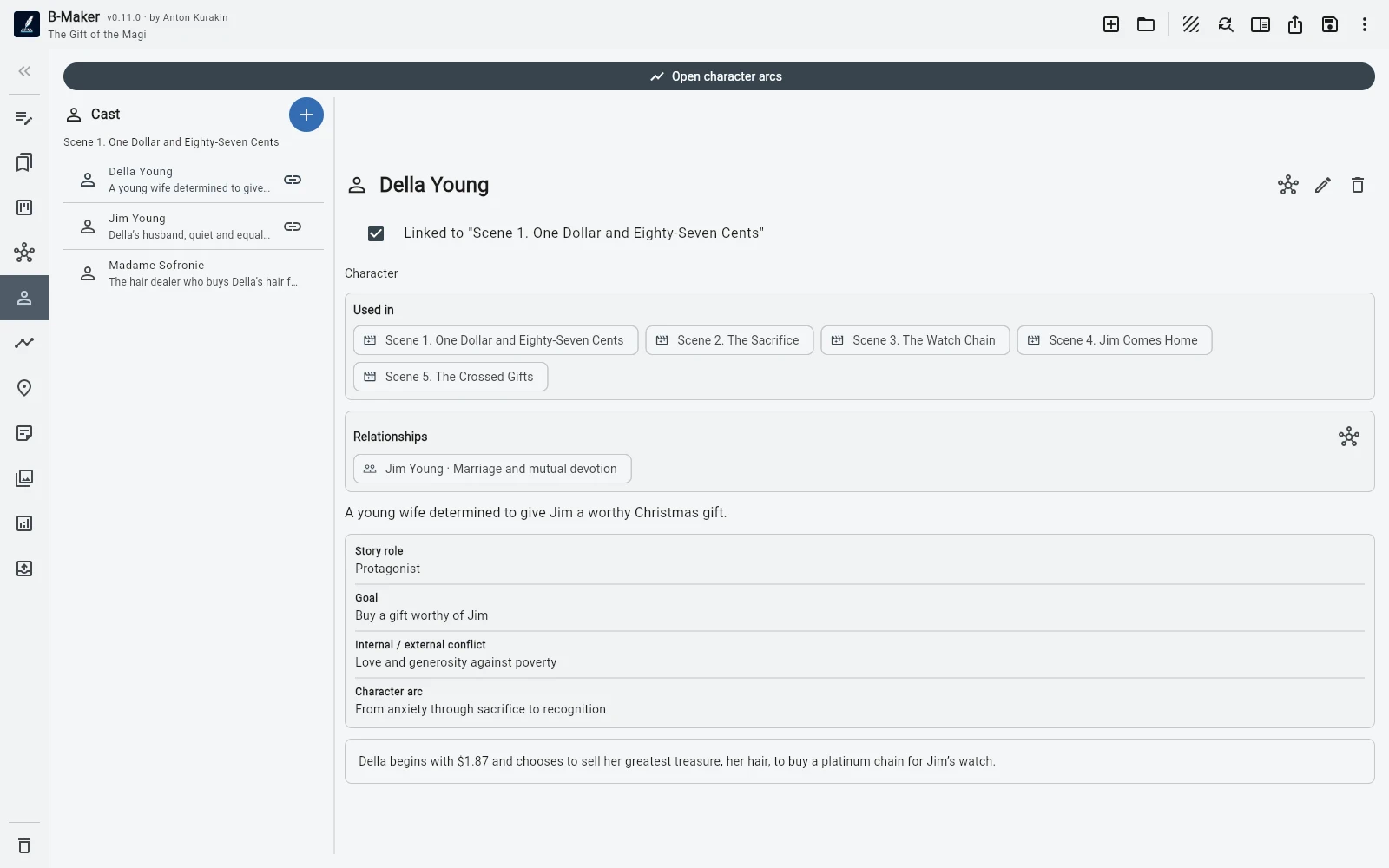
Characters, relationships, arc points, plotlines, locations and POV can cross the chapter structure. Story Grid and POV streams let the author inspect those dimensions without replacing the manuscript tree with a spreadsheet.
Planning the book is not the same as planning its release
Research, first draft, editorial revisions, proofreading, layout and publication are stages around the manuscript. They should not become fake chapters. A publication plan with deadlines, milestones and checklists answers the delivery question while the book structure stays intact.
Nonfiction and articles need briefs too
A brief can capture thesis, reader outcome, audience, tone, publication channel, sources and section questions before full text exists. That is useful planning without pretending the final article can be generated from a template automatically.
What to look for in book planning software
Look for several levels of commitment: loose notes, visual planning, stable manuscript structure, story-specific dimensions and publication stages. The strongest signal is whether information can move forward without copy-paste migration between tools.
Related B-Maker material
Story: from idea to chapter · Characters and plot · Plan from draft to publication · Note, planning card or chapter?