
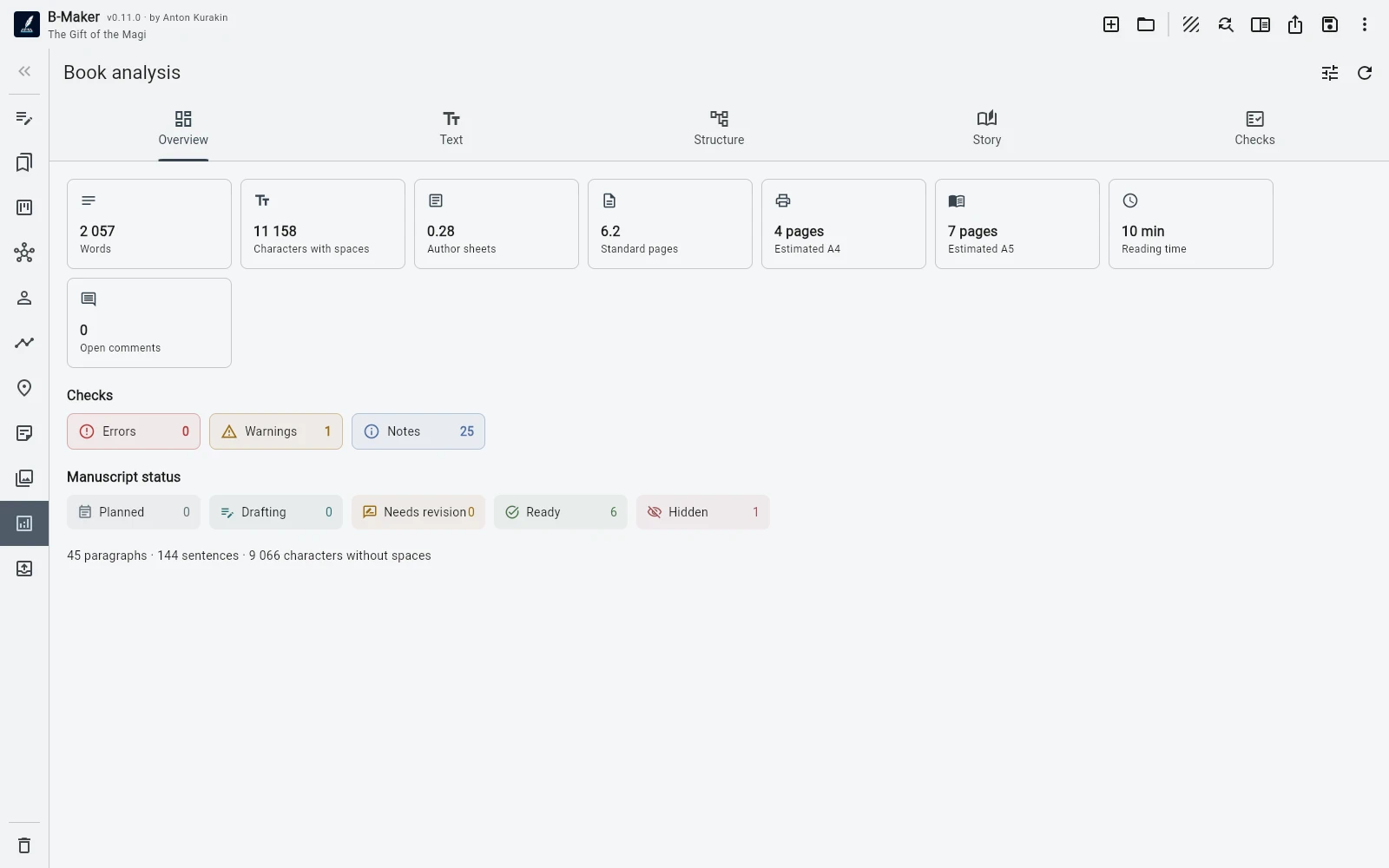
Metrics describe the manuscript. They do not grade it.
Word count measures scale
It is useful for goals, submission limits and understanding how large a section has become. It is not a productivity score by itself.
Reading time measures the reader's commitment
A 3,000-word article and an 80,000-word manuscript are different experiences. Estimated reading time makes that scale easier to feel.
Dialogue share is a signal, not a target
For fiction, a sudden difference between chapters can prompt a useful question. It does not mean there is a correct percentage of dialogue.
Estimated pages and author sheets translate text into publishing units
Writers and publishers often need to reason in pages or author sheets, not only raw characters. The estimate helps planning without pretending to replace final typesetting.
A metric becomes harmful when it becomes a goal without a reason
If the number does not help a real decision, ignore it. Measurement should reduce uncertainty, not create another dashboard to optimize.